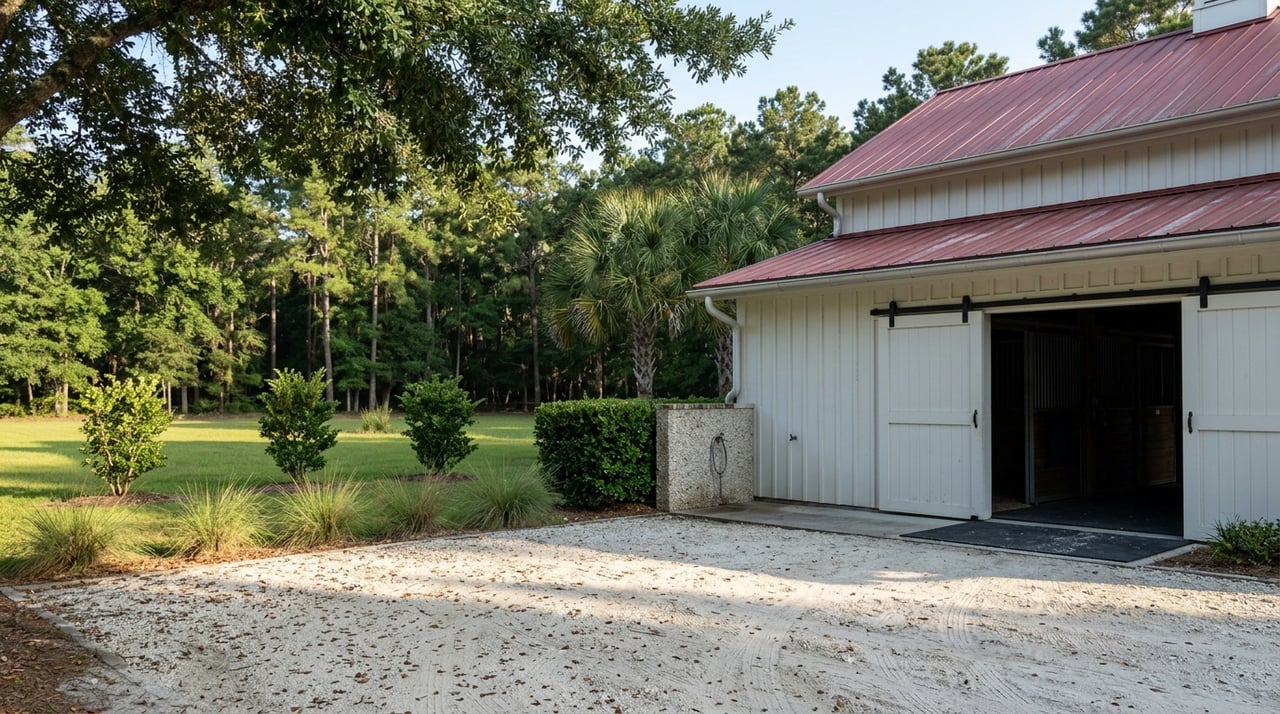
Dreaming of a Johns Island property where you can keep horses, tend a small farm, or simply enjoy more land and privacy? It is an appealing vision, but on Johns Island, the difference between a beautiful idea and a workable property often comes down to parcel-specific details. If you are considering a hobby farm or equestrian retreat here, you need more than acreage alone. You need a clear understanding of zoning, utilities, access, and usable land before you buy. Let’s dive in.
Why Johns Island Appeals to Hobby Farm Buyers
Johns Island offers a rural character that stands out in the greater Charleston area. Parts of the island are identified in Charleston County Greenbelt materials as rural area outside the Urban/Suburban Growth Boundary, which helps explain why so many buyers are drawn to its open land, tree cover, and agricultural feel.
There is also an established equestrian presence. Charleston County’s Mullet Hall Equestrian Center is located on Johns Island and includes 20 miles of public trails, 196 stalls, and show facilities. It does not provide boarding, rentals, or lessons, but it does reinforce that horse use is already part of the island’s landscape.
For buyers, that combination can be compelling. You may find anything from raw land to more improved properties with space for barns, paddocks, and riding use. Still, no two parcels should be judged the same way.
Start With Zoning First
On Johns Island, zoning is the first item to verify because the island is not governed under one uniform set of rules. Charleston County states that its zoning ordinance applies only to unincorporated property, while the City of Charleston notes that Johns Island includes a mix of parcels that may or may not be inside city limits.
That distinction matters right away. A property on one side of a road may fall under different rules than a nearby parcel, including different permit paths, setbacks, buffers, and use allowances. Before you assume a property will support horses or farm activity, confirm which jurisdiction controls it.
City of Charleston parcels
Within City of Charleston portions of Johns Island, AG districts are intended for rural agriculture areas. These districts allow agricultural use, crop production, animal production, forestry, related residential uses, recreational uses, and some commercial uses.
City parcels may also fall under the Johns Island Overlay Zone. That overlay can add requirements for street-front buffers, industrial buffers, signs, and curb cuts. City code also includes critical-line buffers near waterways and saltwater wetlands, which can reduce the portion of land you can actually use.
Unincorporated Charleston County parcels
In unincorporated Charleston County, agricultural districts such as AG-15, AG-10, AG-8, and AGR allow commercial, private, and boarding stables under the county use table, though treatment can differ in some rural districts. The county also states that accessory structures are allowed without a principal structure in agricultural zoning districts.
That can be important if your plan involves a barn, tack room, utility shed, or similar structure before building a main residence. At the same time, county staff note that zoning permits may be required for clearing, grading, tree removal, changes in use, and related site work.
Do not rely on a listing description
A property can be described as horse-friendly and still require much deeper review. County ordinance materials indicate that parcel size and access conditions can apply to private and commercial stables, including documented access if riding areas or trails extend beyond the subject parcel.
In plain terms, you should verify the district, lot size, easements, and intended use before closing. That step can protect you from buying a property that looks ideal on paper but does not support your plans in practice.
Utilities Can Change the Whole Equation
A hobby farm or equestrian retreat often needs more utility planning than a typical residential purchase. Water, wastewater, power, and irrigation can all affect budget, timing, and future use.
Charleston Water System states that public water service extends to Johns Island, and it also provides sewer service to parts of Johns Island. The key phrase is parts of Johns Island. Service availability needs to be confirmed for the specific parcel you are considering.
If a property is not served by a public or community sewer system, SCDES says a septic permit is required before a county building permit can be issued. That means septic feasibility should be part of your early due diligence, especially if you are evaluating raw land or a property with plans for additional structures.
Electric service deserves the same early attention. Berkeley Electric Cooperative has a Johns Island office and serves accounts in Charleston County. For a property with barns, pumps, irrigation, lighting, or outbuildings, service capacity and upgrade costs can affect the practicality of your plans.
Irrigation and backflow planning
If you expect to irrigate pasture, gardens, or wash areas using public water, utility planning should go beyond a simple service check. Charleston Water System notes that irrigation systems connected to public water can trigger backflow-protection requirements.
That may sound technical, but it is exactly the kind of detail that can affect installation scope and cost. On a land-focused property, these systems should be reviewed as part of the purchase decision, not after closing.
Stormwater and Drainage Matter on Johns Island
Drainage is one of the most important local issues to understand. Charleston County classifies unincorporated Johns Island as a Stormwater Special Protection Area, along with West Ashley and James Island.
For buyers, this means land disturbance over 5,000 square feet requires a stormwater permit in unincorporated areas covered by that designation. If your plans involve clearing, grading, paddocks, a barn pad, expanded driveway areas, or other site work, stormwater review may become part of the process.
Beyond permitting, you should also study how the land functions in real life. A property may have the acreage you want, but wet areas, stormwater features, or protected buffers can shrink the usable footprint in a meaningful way.
Evaluate the Usable Ground
When you tour a property, focus on more than total acreage. The practical question is how much of the land is dry, connected, and functional for the way you want to use it.
For a hobby farm or equestrian setup, consider whether the ground supports pasture, paddocks, barn placement, trailer movement, and daily circulation. Also look at whether the layout leaves enough room to move equipment and manage the property comfortably.
Ask these on-site questions
- Is the usable ground dry and contiguous?
- Are there wet areas or buffer zones that reduce buildable space?
- Is there enough room for a barn, paddocks, storage, and trailer access?
- Will the property require significant clearing or ongoing vegetation management?
- Does the existing layout support the level of horse or farm use you want?
Charleston County also states that property owners must maintain developed land and not allow it to become overgrown. Even a modest farm property comes with real upkeep, so it helps to be honest about how much maintenance you want to take on.
Access Is More Than a Driveway
Access can be easy to overlook until it becomes a problem. On Johns Island, driveway geometry, frontage conditions, and trailer turning radius can be just as important as the structures on the property.
Charleston County’s work on the Maybank Highway and Main Road corridors notes coordinated land-use and development requirements, and county ordinances show that new curb cuts and shared-access arrangements can require recorded agreements and agency coordination. If a parcel fronts a state road or falls within a corridor with added review, there may be extra permit steps.
For equestrian or farm buyers, practical access questions should be part of every showing and diligence period.
Access items to confirm
- Whether the existing driveway is legally established
- Whether a horse trailer or large truck can enter and turn safely
- Whether there are shared-access agreements or easements
- Whether frontage conditions could affect future driveway changes
- Whether road-related approvals are needed for your intended use
Tax Assessment May Be Worth Reviewing
If you intend to use the property for bona fide agricultural purposes, tax treatment may be relevant. Charleston County states that a tract used for agricultural purposes, including raising or storing crops, livestock, plants, trees, fowl, or animals, may qualify for agricultural use assessment.
That is not something to assume automatically. Your plans should be evaluated against the county’s requirements, and timing matters because the county lists January 15 as the application deadline.
What the Johns Island Market Looks Like
Current public listing portals show that Johns Island offers a mix of opportunities. Buyers may encounter raw land, small-acreage pasture tracts, lots in equestrian-oriented communities, and more improved residential properties with horse-farm positioning.
That variety can be a strength, but it also means apples-to-apples comparisons are not always easy. One parcel may offer acreage but limited utility access, while another may have existing improvements but tighter zoning or access constraints.
A Smart Buying Approach for Johns Island
If you are serious about buying a Johns Island hobby farm or equestrian retreat, your best approach is disciplined due diligence. The right property is not simply the one with the most land. It is the one where zoning, overlay status, utility availability, drainage, access, and intended use align.
This is where local guidance matters. A well-bought property can offer privacy, flexibility, and a distinctive Lowcountry lifestyle, but getting there requires careful review before you close.
If you are considering land or an equestrian property on Johns Island, Middleton Rutledge can help you evaluate the details that matter most and approach the search with clarity and discretion.
FAQs
What should you verify before buying a Johns Island equestrian property?
- You should verify the controlling jurisdiction, zoning district, overlay status, permitted uses, utility availability, drainage constraints, access conditions, and the amount of truly usable ground before closing.
Can every Johns Island parcel support horses or a hobby farm?
- No. Parcel-specific factors such as zoning, lot size, buffers, septic or sewer availability, stormwater rules, and access can limit whether a property will work for horse or farm use.
Does Johns Island have public water and sewer service?
- Public water service extends to Johns Island, and sewer service is available in parts of Johns Island, but both should be confirmed for the specific parcel you are considering.
Why does zoning vary across Johns Island properties?
- Johns Island includes both unincorporated Charleston County property and parcels within the City of Charleston, so nearby properties can be subject to different zoning rules, overlays, and permit requirements.
What stormwater issue should buyers watch on Johns Island land?
- In unincorporated Johns Island, land disturbance over 5,000 square feet requires a stormwater permit because the area is classified by Charleston County as a Stormwater Special Protection Area.
Can an agricultural property on Johns Island qualify for agricultural tax assessment?
- It may qualify if the tract is used for bona fide agricultural purposes as defined by Charleston County, and buyers should review the county requirements and application timing carefully.